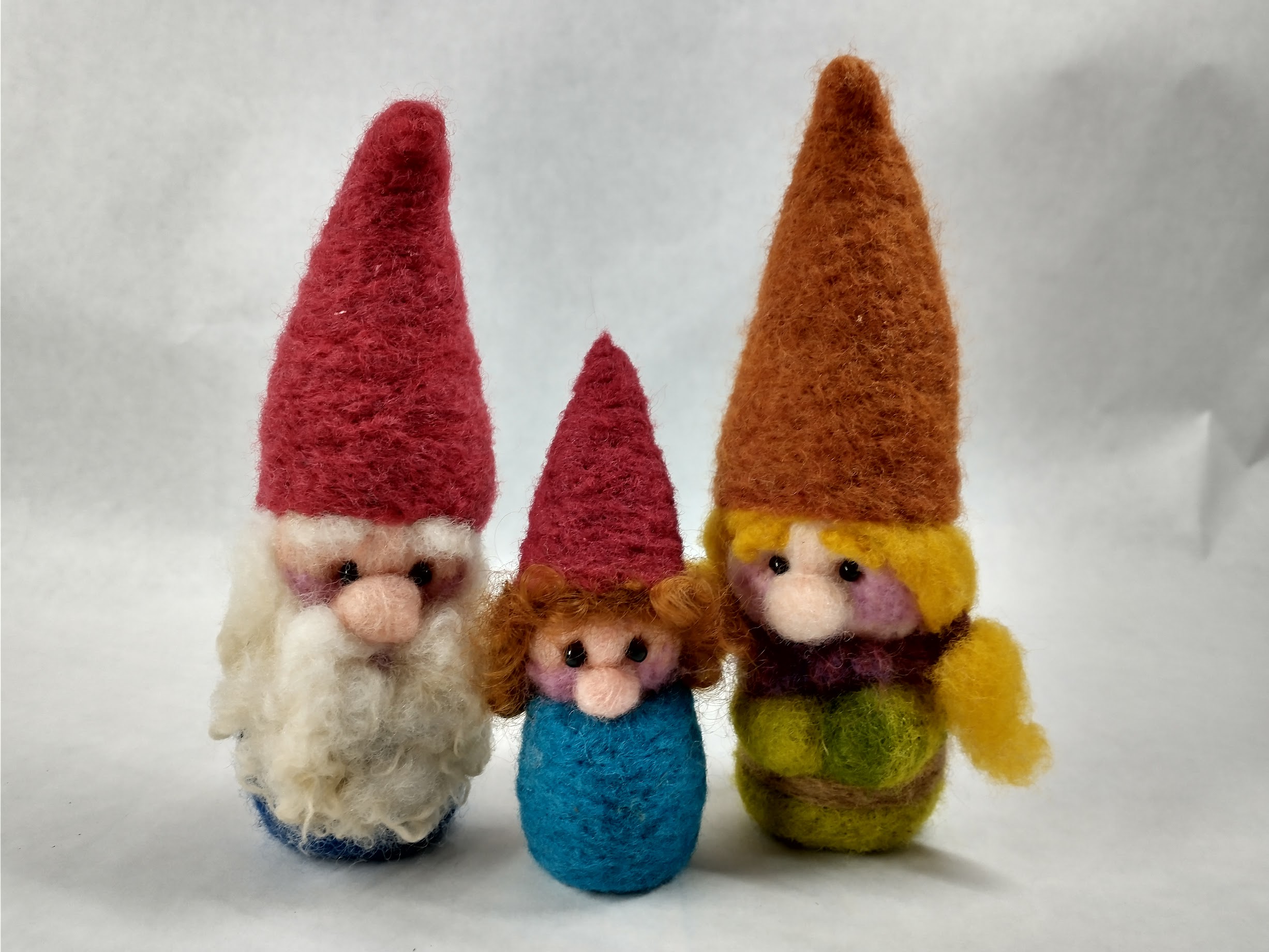
Don’t let the jovial smile and adorable hat make you think the nisse (Norwegian), tompte (Swedish), brownie (Scottish), or gnome (German) are all chuckles, like a miniature Santa. While much more sympathetic and well-meaning than some members of the Fae, these diminutive folk have their limits.
I grew up with stories of gnomes (predominantly from Rien Poortvliet and Wil Huygen’s watercolor-illustrated book that takes you on an adventure of living with these magical peoples), with their blue shirts and red, pointed hats, dwelling deep in the forests. Their homes are beneath aged trees, and they often serve as medics to wild animals and birds. But they don’t like trolls, and the feeling is mutual. Trolls have a reputation for cruelty.
While they generally hold no grudges against humans, gnomes are wary and secretive and would rather remain hidden. They have reason to, for humans are not always kindly to the forests and their creatures. But they can be friendly and helpful, especially to lost, innocent children.
Nisse (nee-suh, plural nisser) have a slightly different role from gnomes, in that they are associated with the homestead, especially the barn. They hide amongst the loose hay, helping to tend the livestock, with a special fondness for horses. If a small tool goes missing, it’s more than likely the nisse are borrowing it and will return the object after a while—reminiscent of the delightful Borrowers stories I enjoyed as a younger reader.
It’s important to keep your farm’s nisse happy, with customary offerings of honey-sweetened porridge with cream at Yule, to show your appreciation. If there’s one thing the nisser don’t like, it’s disrespect. Everyone works so hard on a homestead, there’s no room for even a snide comment, especially about slacking.
I remember a story about one unlucky farmer who forgot this part of the sacred trust between crofters and their nisse. We’ll call him Hans. It so happened it was haying season, and in this mountainous region of Norway, Hans’ hayfield was quite a steep jog down from where the barn was built. This meant having to haul the finished, dried hay up this mountain, one load at a time, to store it for the winter to feed all the animals.
Hans was coming down the hill with his handcart, picking his way carefully, when he saw his little nisse coming up the hill, in his blue coat and slouchy, red hat with a curling, white beard. The wee fellow was huffing and puffing, dragging one piece of hay up the rocky path. Hans couldn’t help himself, and he laughed out loud! “Some help you are, one blade of hay at a time!”
Well, of course, that was the wrong thing to say, for as Hans passed the nisse with his side-eye glare, the farmer saw all was an optical illusion and that instead of one blade, the little man was lugging a HUGE pile of hay behind him! Oh no!
That hay went to the neighbor’s farm, and Hans had no more help bringing in his crop.
Creatures like the gnome and nisse do not mean ill, but they are not guileless. They know meanness when they see it, and they are not going to tolerate it. And, considering these wee people could be anywhere and listening, it’s a reminder that goodness, kindness, caring, and sharing are pillars of a happy life.
So, when in doubt, don’t piss off the fairies.

I love hearing from friends! Have a question, idea, or request? Please use this form to send your message, and the internet Raven will wing it my way !
3 Responses
Hi Laura I have the knitting pattern for the red hat but not sure how to knit the rib stitch, would love to join Saturday class. What time e and when does this start? Than,s Cheryl in boise idaho,
Hi Cheryl, did you see the email I sent to invite you to the event? 🙂
Laura
I love your Nisse story, as I enjoy all of your articles. I am going to; incorporate the Nisser resistance hat into my wardrobe. I also have been trying to come up with a quilt with the 250 year US celebration theme, but most of my ideas have a very political message. You have me thinking in a less obvious direction now!